Bringing Retro Soul to Modern Design with Vintage Market
There’s a certain warmth and authenticity that comes with vintage-inspired design. It feels familiar, trustworthy, and full of character. For designers and creators looking to capture that nostalgic essence without sacrificing modern usability, the Vintage Market font duo offers a compelling solution. It’s not just a typeface; it’s a toolkit for building visual stories with a retro heart.
Anatomy of a Font with a Story to Tell
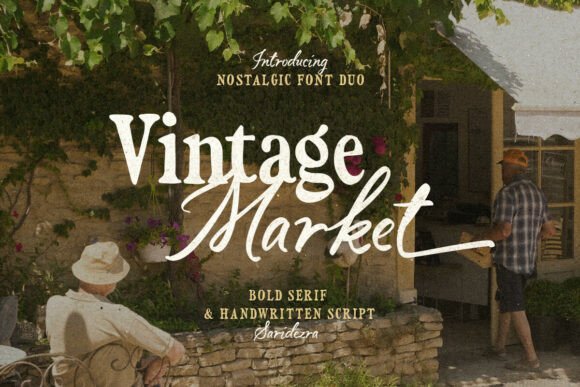
At its core, Vintage Market is a premium font duo that pairs two distinct yet harmonious styles. The first is a sturdy, bold serif font with a classic, grounded feel. It carries the weight and authority needed for headlines, logotypes, and key messaging. Its letterforms have a timeless quality, avoiding overly stylized serifs that might date quickly. This makes it a reliable display font for projects where clarity and impact are paramount.
The second half of the duo is a fluid, expressive script font. This is where the handwritten font personality shines through. The strokes have a natural, hand-lettered flow, adding a personal, artisanal touch. A key feature is the inclusion of ending alternates. These are stylistic variations for the last letter of a word, allowing you to create more dynamic and visually appealing compositions. Instead of every word ending abruptly, you can choose a flourish that guides the eye and adds a touch of elegance or casual flair, depending on the context.
Where Vintage Market Truly Comes Alive
The practical strength of this creative font lies in its versatility across a wide range of applications. It’s a commercial font built for real-world use, and understanding its best fit is key to leveraging its full potential.
In brand identity, Vintage Market excels at creating a cohesive, nostalgic look. A coffee roaster, a boutique brewery, a handcrafted soap maker, or a local bakery can use the serif for their primary logo lockup and the script for accent text on packaging, menus, or their website. This pairing instantly communicates a brand story rooted in tradition, craftsmanship, and quality. For logo design, the combination allows for a main wordmark that is strong and legible, with a tagline or secondary element rendered in the charming script.
For editorial design and publishing, think of magazine features on retro fashion, recipe book covers, or chapter headings in a novel set in a bygone era. The serif provides a solid, readable foundation for pull quotes or section titles, while the script can be used for author names, subtitles, or decorative callouts. In packaging design, the duo can transform a simple product label into something that feels curated and special, perfect for artisanal goods.
Digital applications are equally strong. Social media graphics benefit hugely from its personality. The bold serif catches the eye in a fast-scrolling feed for announcements or sale graphics. The script adds a human, conversational tone for quotes, testimonials, or event invitations. It can bring a consistent vintage aesthetic to a brand’s entire Instagram grid or Pinterest board. For web design, while primarily a display font, it can be used strategically for hero section headlines, call-to-action buttons, or special landing pages to establish a strong thematic mood.
Practical Guidance for Integrating This Type Duo
Choosing a font is a strategic decision. Here’s how to evaluate if Vintage Market is the right design asset for your project.
- Evaluate Project Fit: Does your project’s message align with vintage, artisanal, or retro themes? This font duo is a specialist. It’s perfect for a craft fair poster, a heritage brand’s website, or a retro-themed wedding invitation. It’s less suited for a cutting-edge tech startup or a minimalist corporate report. Always start with the project’s core message.
- Test Font Pairings: While Vintage Market is a complete duo, you’ll often need a third, neutral typeface for body copy. Pair it with a clean, simple sans serif font for maximum contrast and readability. The vintage display fonts handle the personality; the sans serif handles the long-form reading. Avoid pairing it with another highly decorative or ornate serif font, as this will create visual competition and confusion.
- Review the Included Styles: Before purchasing, check the full character set. Does it include the numerals, punctuation, and symbols you need? The multi-language support is a significant advantage for brands with an international audience, ensuring proper diacritical marks are available. Explore the ending alternates in the script font—see how they function in design software to understand the creative control you’ll have.
- Consider Readability: The bold serif is highly legible at larger sizes for headlines. The script, however, should be used thoughtfully. Avoid setting long paragraphs or small body text in the script. Its strength is in short bursts—a name, a greeting, a key phrase. Always print a test or view at 100% on screen to check legibility at your intended size.
- Understand Licensing: For any commercial font, licensing is critical. Ensure the license covers your intended use—whether for a client project, merchandise for sale, or digital products. A reputable font will provide clear licensing terms for both personal and commercial use.
More Than Just a Nostalgic Look
Using a font like Vintage Market goes beyond surface-level aesthetics. It directly influences how your audience perceives your work. The strong serif conveys stability, tradition, and confidence. The handwritten script adds warmth, approachability, and a human touch. Together, they create a balanced visual hierarchy that guides the viewer’s eye naturally from the most important information to the supporting details.
This thoughtful approach to modern typography enhances brand perception. It shows intentionality and an understanding of design language. Consistency in using such a distinctive duo across touchpoints builds recognition. When a customer sees that specific serif and script combination on a social post, a package, and a website, it reinforces the brand’s identity and makes it more memorable.
Ultimately, Vintage Market is a tool for storytellers. It provides the visual voice for projects that want to feel established, authentic, and crafted with care. By applying it strategically and pairing it wisely, you can harness its retro soul to create designs that are not only beautiful but also deeply resonant with your audience. It’s a valuable addition to the toolkit of any designer, marketer, or creator looking to add a layer of timeless character to their work.